
Forged steel and cast steel describe manufacturing routes. They do not, by themselves, establish a valve's toughness, pressure rating, defect acceptance or suitability for the intended service.
Select the applicable material specification and qualified valve construction, then define the required inspection. A forging is not automatically defect-free, and an inspected casting is not automatically inferior for a given duty.
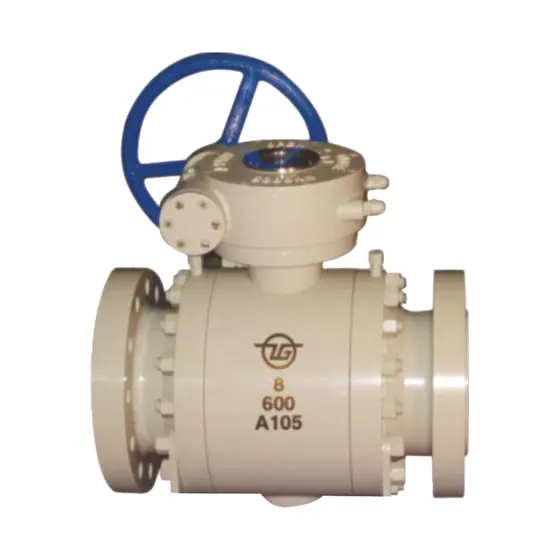
What changes in manufacture
Casting forms the part by solidifying liquid metal in a mould. It can produce complex body geometry and internal passages. The process needs control of solidification, feeding, heat treatment and other manufacturing factors relevant to the part.
Forging shapes solid material through mechanical working. Its resulting properties depend on the starting material, working history, geometry and subsequent treatment. Forged construction can be advantageous in appropriate designs, but the word forged does not prove the required properties of an unidentified component.
The comparison therefore concerns two qualified supply routes for an actual design. It should not begin with a claim that every casting has unacceptable porosity or every forging has unlimited fatigue resistance.
Keep specification, grade and product form together
ASTM A216/A216M addresses carbon-steel castings for relevant pressure-containing applications; ASTM A105/A105M addresses specified forged carbon-steel piping components. These are distinct specifications. WCB and A105 should not be treated as identical materials with only a different manufacturing label. ASTM A216/A216M, ASTM A105/A105M
The same care applies to stainless and low-temperature selections. A cast grade and a wrought grade may be associated with a similar alloy family while having different specified chemistry, product requirements and acceptance. Proposed substitutions need review against the design and service requirements.
| Purchase item | What should be identifiable |
|---|---|
| Pressure-containing part | Product form, material specification, grade and applicable edition |
| Material condition | Required heat treatment and relevant properties |
| Service qualification | Temperature, corrosion and other application requirements |
| Manufacturing quality | Applicable examination scope and acceptance |
| Traceability | Heat/test-unit record linked to the component and supplied valve |
Do not create an artificial size boundary
Small valves are often offered in forged constructions and larger or complex bodies in cast constructions. Those are supply patterns, not a universal rule that forging stops at NPS 2 or that large forgings do not exist.
API 602 is a valve product standard with a defined size and construction scope; it is not a forging-process specification. The API catalogue identifies its subject as gate, globe and check valves at specified smaller sizes. Use the applicable standard and offered construction rather than turning the standard number into a material grade. API standards catalogue
Availability, tooling, geometry, order quantity and inspection affect the actual commercial comparison. Obtain quotations for the required construction; avoid invented industry percentages or a generic cost crossover.
Match examination to the required risk and acceptance
Different examination methods answer different questions. Surface methods investigate accessible surface discontinuities under their applicable conditions. Volumetric methods such as RT or UT can investigate internal regions, with capabilities and limits related to the material, geometry, procedure and discontinuity orientation.
Neither a generic “100% NDT” statement nor the manufacturing route defines the examination programme. State the applicable code/project requirements, components, locations, coverage, procedure, acceptance basis and reporting. For critical geometry, ensure that the planned method can actually examine the required region.
Do not assume that a hydrostatic shell test replaces all required material examination. It provides a result under the stated pressure-test conditions. It does not establish that every relevant discontinuity is absent or acceptable under every service condition.
Review repair and traceability requirements before manufacture
Where repair is permitted, the governing material specification and order requirements define the relevant controls. Identify any required notification, approval, procedure, heat treatment and re-examination. Avoid a blanket statement that every welded repair is prohibited or that every repair is acceptable without review.
Retain the material identity through machining and assembly. A certificate with the correct grade is useful only when it can be associated with the required component and supplied valve. Marking and controlled records should follow the agreed traceability arrangement.
A hypothetical low-temperature comparison
Suppose a buyer receives two offers, one described only as forged carbon steel and the other as cast low-temperature steel with identified material and test records. The first is not automatically preferable because it says forged. Both need to meet the required minimum-temperature, design and inspection basis.
The reviewer should ask for the first offer's actual specification, condition and required toughness evidence, then compare both against the same requirement. Conversely, a casting's complete documentation does not excuse a shortfall in a required property. Manufacturing route and documented compliance must be evaluated together.
Use ZGV's material references accurately
ZGV's 2511 ball-valve table lists a WCB body, while its 2512 table lists an A105 body. These are useful examples of why the actual product reference and offered material schedule matter.
Send the material, service and inspection requirements to ZGV. Request the proposed construction and records for each pressure-containing part, with any substitution or examination deviation identified before order approval.
ZGV VALVE · Request a quotation · WhatsApp +86 13732021078
Download the ZGV valve RFQ template and attach your service conditions and required inspection documents.