
Matching an electric actuator to the actual movement pattern supports a clear comparison of on/off and modulating packages. State the motor starts, running duration, load and control performance needed for the installation.
Specify the actual movement pattern and required control performance. On/off or modulating is the beginning of an actuator duty description, not evidence that the complete valve package is correctly sized or rated.
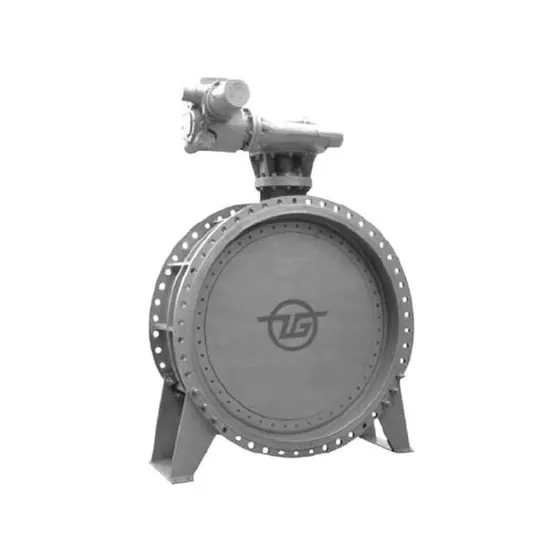
ZGV's electric butterfly and driven gate-valve catalogue entries give buyers a practical route into an electric-valve enquiry. Add the movement profile, load, supply and control requirements so the proposed valve and drive can be compared on the work the installation needs.
Describe the work instead of only the signal
A 4–20 mA input can request a position, but the input type alone does not establish useful regulation. The valve needs a suitable flow characteristic and operating range; the actuator, gearbox, coupling and controller need to deliver the required response.
For an isolation duty, identify the required full movements, action time, operating differential pressure and long idle periods. For modulation, include frequency and size of corrections, expected operating travel and the required accuracy, deadband or response criteria as applicable.
Do not infer the duty from quarter-turn or multi-turn alone. Those describe motion. A motorised gate package, a part-turn butterfly package and a control-valve actuator can require different torque, thrust, travel and duty reviews.
An illustrative movement count
The following is a simplified planning example, not an actuator rating or standard duty classification. Assume every commanded movement causes one motor start and the stated running time.
| Assumed pattern | Movements | Assumed motor running time | Calculated running share |
|---|---|---|---|
| Occasional isolation | 2 per hour | 15 seconds each | 30/3,600 = 0.83% |
| Frequent corrections | 12 per minute | 3 seconds each | 36/60 = 60% |
The second pattern also implies 720 starts per hour under the stated assumption. That arithmetic shows why full-stroke time alone cannot describe modulation. It does not approve a motor, establish a thermal duty class or account for overlapping commands, control logic or load variation.
Ask the supplier to assess the real movement history and duty against the selected actuator's limits. Where operating records exist, they are more useful than guessing from a nominal control-signal frequency.
Match control performance to the valve
A valve can reach every requested angular position and still regulate poorly if its installed flow behaviour does not suit the process. Backlash, friction, drive resolution and a valve operating too near its seat can all be relevant to the package review.
Request the required operating points and travel range, then ask for the proposed valve and actuator combination. Do not assume that adding a position controller converts an ordinary isolation valve into a suitable control valve.
Rotork's IQ3M electric modulating actuator page identifies modulating construction and a starts-per-hour limit for that product. It is a relevant example of the duty information to request. The stated limit belongs to that Rotork configuration and does not rate an unspecified ZGV actuator package.
Put electrical and environmental details in the offer
| Requirement group | Details to agree |
|---|---|
| Supply | Voltage, phase, frequency and relevant supply limits |
| Motion/load | Torque or thrust, travel, turns and required time |
| Duty | Starts, running duration, correction pattern and load conditions |
| Controls | Commands, local/remote authority, feedback and required performance |
| Failure events | Power loss, signal loss, fault and restart behaviour |
| Environment | Ambient conditions, ingress protection and any required hazardous-area approval |
| Assembly | Gearbox, bracket, coupling, orientation and maintenance access |
Keep ingress protection and any required hazardous-area certification as separate requirements. Ask for the exact supporting documents when the installation requires them, rather than infer one from the other or from the appearance of an enclosure.
Diagnostics are useful when someone can act on them
Torque profiles, event histories and movement counts can support maintenance if the selected equipment provides them. Identify how the data is accessed, which records are retained and who reviews a change. A screen full of unreviewed values does not create a maintenance process.
Rotork's connectivity and asset-management discussion connects data collection with asset criticality and maintenance action. Its communication protocols and software are its own product features; they should not be listed as standard on a ZGV enquiry without confirmation.
For a smaller installation, a clear manual log and accessible fault indication may be the appropriate requirement. Specify the useful outcome, not the largest feature list.
Start the electric-valve enquiry with a ZGV product reference
ZGV publishes an electric butterfly valve entry 2443 and flat-plate gate entry 2535. They provide product starting points for different driven-valve duties. Specify the operator for the flat gate enquiry, then request the actual actuator model, electrical duty and required positioning performance for the offered package.
Ask for the actual offered valve/actuator build and a calculation based on the required service. Confirm maximum output against the drive train's permitted loads as well as adequate output at the worst required condition. The accessory and assembly drawings should match the quotation.
Freeze the settings and the acceptance test
Agree what must be demonstrated: required movements, positioning/feedback, local/remote operation and the specified failure/restart cases. Record the approved settings, firmware/configuration where relevant, drawing and test conditions with the assembly identity.
A factory demonstration under no load is useful for the functions observed. It does not silently prove operation against every process differential pressure. The supplier should identify the relationship between the test, sizing basis and required service.
State whether an accuracy requirement concerns shaft position, valve travel or the controlled process variable. Those are different measurements. An impressive position figure does not by itself demonstrate the required flow regulation in the installed system.
Send the movement profile, service and electrical requirements so the reply can propose the actual package. A clear duty description makes on/off and modulating offers comparable on the work they must perform.
ZGV VALVE · Zhejiang Zhonggong Valve Group Co., Ltd. · Quality and certification records
Download the ZGV valve RFQ template and share your service conditions, quantities and required documents with ZGV.