
A low-temperature body option and a cryogenic valve qualification answer different questions. A quotation that changes the casting grade but leaves seals, cavity relief and testing undefined has not yet described a complete cold-service assembly.
Specify the minimum design and operating temperatures, fluid state, pressure cases and qualification requirements. Then verify the complete valve. Do not infer cryogenic suitability from a material name, a long bonnet or a low-temperature product title.
Begin with temperatures that describe actual stages
A useful cold-service datasheet separates normal operation from cooldown, start-up, shutdown and a defined upset. Record the pressure that accompanies each temperature. Also identify the required minimum design metal temperature under the governing design basis, rather than derive it casually from one normal process reading.
The fluid matters. A refrigerated liquid, a cold gas and a service that can contain both phases impose different questions. Composition, contaminants, cycling and required shutoff direction belong in the enquiry before a supplier selects materials or seals.
The word cryogenic is used within specific standards and specifications. Instead of arguing over a universal dividing temperature, name the governing project requirement and the actual temperature range. That makes competing offers reviewable even when their marketing categories differ.
What ZGV's published options establish
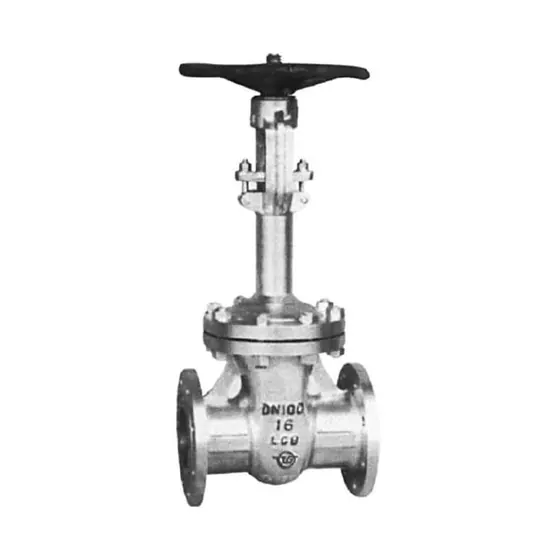
ZGV lists low-temperature gate valves and low-temperature globe valves. Its 2514 ball valve material table also includes an LCB body in a Low-temperature service column.
These are useful enquiry references. A product title or material column alone does not establish qualification for LNG, liquid hydrogen, liquid oxygen or an arbitrary minimum temperature. Ask ZGV to identify the offered engineering model and the evidence for the actual service. This avoids treating a real catalogue option as a claim broader than its documentation supports.
Why a cold-service valve needs design changes
Cooling affects more than the body grade. Metal and seal components contract, and the assembled design has to retain its intended sealing and movement as temperature changes. The bonnet arrangement can keep the packing region away from the coldest process conditions; its approved orientation and insulation boundary are therefore functional details.
Emerson's KTM cryogenic model describes extended bonnets for packing protection and construction addressing thermal shrinkage. These are examples from that manufacturer's design. For ZGV, ask which corresponding design provisions and cold tests apply to the offered assembly.
A useful review has three separate outcomes: suitable pressure-boundary material, seals that perform at the required temperature, and a complete assembly that operates and relieves trapped liquid as required. A low-temperature casting certificate closes only the relevant material item.
Review the entire cold assembly
| Review item | Evidence or confirmation to request |
|---|---|
| Pressure-containing metal | Specified grades, relevant condition and low-temperature qualification required by the project |
| Seats, seals and packing | Exact materials, construction and complete assembly limits |
| Stem/bonnet arrangement | Approved drawing and installation-orientation restrictions |
| Trapped cavities | Identified pressure-relief path and discharge destination |
| Leakage performance | Test medium, temperature, direction, acceptance and applicable qualification scope |
| Operator | Required torque or thrust under the specified cold-service conditions |
| Cleanliness and preservation | Service-specific requirements and how they are maintained through shipment |
Changing a body grade is only one row in this table. A valve can have suitable pressure-boundary material while another component or design feature remains unresolved.
Cavity pressure is a separate design question
A ball valve can retain liquid inside a closed cavity. Heat entering that trapped volume can raise pressure; a cryogenic liquid may also vaporise. The supplier therefore needs to explain how the proposed design manages the trapped volume and which side receives any discharge.
Habonim's discussion of bidirectional cryogenic floating ball valves illustrates the relationship between sealing direction and a cavity-relief arrangement. Its proprietary solutions and performance claims belong to Habonim. For a ZGV offer, obtain the actual seat and relief drawing rather than infer the same mechanism from the words bidirectional or floating.
A relief path must remain suitable for all required pressure directions. Ask what happens if the nominal upstream side becomes the lower-pressure side, or if an external relief route is isolated. Those are design-review questions, not instructions to alter an installed valve.
A room-temperature test is useful, but incomplete for a different requirement
A routine pressure test can document results under its stated conditions. It cannot silently answer a requirement for leakage during cold operation, after cooldown or after specified thermal cycles. If the project requires additional testing, agree it before the order is placed.
Separate a type qualification from the records required for the supplied valves. A report may cover a defined design family and range. The vendor should explain how the offered size, materials, seat construction and pressure class fall within that scope, and identify any order-specific testing still required.
Do not borrow a competitor's extreme temperature or cycle count as proof. Habonim's liquid-hydrogen article describes its own application and technology; it does not establish ZGV capability for that service.
An illustrative quotation review
Suppose a hypothetical buyer needs a low-temperature isolation valve with occasional reverse pressure. The first offer states “LCB body, extended bonnet, standard test.” Before treating it as compliant, resolve four gaps:
- Which pressure-temperature combinations are approved for the complete offered assembly?
- What are the required and qualified shutoff directions?
- How is trapped liquid relieved under each relevant pressure condition?
- Which tests and records address the specified minimum temperature?
The offer may be suitable after clarification, or it may require a different configuration. The exercise has not selected a valve; it has identified the information needed to make that decision.
A colder test medium is not the entire qualification comparison
A report may name liquid nitrogen while the service schedule names LNG. That does not make the two duties identical, nor does the medium name by itself establish coverage. Compare the actual test temperature, pressure, valve configuration, sealing directions, operating sequence and acceptance with the required duty and permitted qualification scope.
Similarly, a spring-energised lip seal is one possible design feature, not a requirement shared by every cryogenic valve. Ask which seats and seals are actually proposed and how their complete assembly is qualified.
Do not select a bonnet extension from an unsupported universal length table. The offered design, installation orientation and approved insulation boundary must work together. Ask the supplier to identify them on the assembly drawing, including any restriction affecting the packing region.
A hypothetical offer containing a colder test temperature but no reverse-pressure or installed-orientation information still has unresolved requirements. Record those gaps separately instead of declaring it compliant from temperature alone.
Include the installation and operating constraints
The actual orientation, insulation limits, actuator envelope and maintenance access should appear on the assembly drawing. A bonnet dimension from a manual catalogue version does not necessarily describe a powered package. Also ask how preservation and cleanliness requirements survive transport and installation.
Cold-service selection involves engineering responsibilities beyond purchasing. The enquiry should make those responsibilities explicit: who approves the service, who confirms the offered build, and which documents close each requirement.
A minimum-temperature requirement may involve metal toughness, sealing and operating function at the same time. Identify which record answers each part. A material impact-test record cannot silently become a complete-valve cold leakage result; a cold functional demonstration does not replace the required material evidence.
For ZGV, send the cold-service schedule with the relevant product reference and request a configuration-specific quotation. Include temperature, pressure, fluid state, direction, required qualification and installation drawing. A complete reply can then be checked against the service rather than against an undefined cryogenic label.
ZGV VALVE · Request a quotation · WhatsApp +86 13732021078
Download the ZGV valve RFQ template and attach your service conditions and required inspection documents.