
An RFQ that says “API ball valve, full bore, fire safe” can produce offers that are difficult to compare. The missing information is the relationship between the product standard, the required function and the actual proposed construction.
API 6D and API 608 have different scopes. Choose the governing standard from the project requirements, then specify bore, seat function, service conditions and evidence separately. Neither standard name is a substitute for that application review.
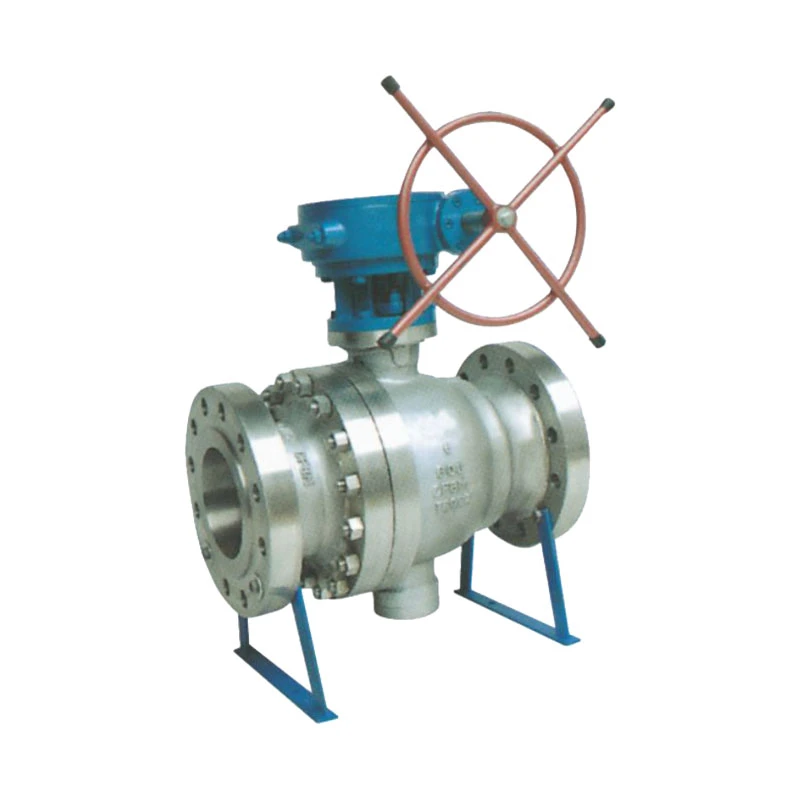
Start with scope, rather than a quality ranking
API 6D concerns valves used in pipeline and piping applications. API 608 addresses metal ball valves within its stated connection, size and pressure-class scope for petroleum, petrochemical and industrial applications. They are not simply “premium” and “basic” versions of one specification. The applicable edition and addenda belong on the requisition. API 6D announcement, API refining standards catalogue
For a plant replacement, begin with the piping class, design basis and owner specification. For a pipeline isolation duty, add the required isolation and pigging functions. If documents conflict, record the conflict and obtain its disposition before comparing compliant prices. A supplier cannot resolve an unstated precedence rule by choosing whichever standard is easier to quote.
| Specification layer | What belongs there | What it does not settle alone |
|---|---|---|
| Product standard | Governing document, edition and applicable additions | Suitability for every fluid or service |
| Valve construction | Support arrangement, body joints, bore and seats | A particular isolation function without its pressure cases |
| Application | Pressure-temperature cases, fluid, direction and cycling | Qualification of the offered build |
| Acceptance | Required tests, records and witness arrangements | Long-term performance outside the tested conditions |
Keep full bore and piggable separate
A full-bore description concerns the valve passage; pigging also concerns the actual tool envelope and the installed pipeline. Request the minimum clear bore, transitions, alignment, internal projections and any restrictions relevant to the intended pig. A nominal pipe size is not the measured internal diameter of every component.
Consider a hypothetical replacement in a pigged line. Both bidders describe a full-bore valve. One supplies an approved bore drawing and confirms compatibility with the specified tool; the other supplies only a catalogue heading. The second offer remains incomplete even if its product-standard label matches the first. The unresolved item is tool passage, not the prestige of the label.
Avoid assuming that every API 6D valve has the same bore option or that every full-bore valve is automatically approved for intelligent inspection tools. The ZGV full-bore guide explains the separate bore-selection decision.
Define isolation through pressure cases
Ball support and seat function answer different questions. Floating or trunnion-mounted describes how the ball is supported. DBB or DIB concerns required sealing barriers and pressure arrangements. Ask which seat holds pressure from each line end, what happens with pressure in the cavity, and how trapped fluid is managed.
Where the owner requires a particular barrier function, put that function and its acceptance basis into the RFQ. “Two seats” does not describe the whole isolation task. Nor should a self-relieving design be substituted for a cavity-retaining requirement without review of the actual arrangement.
Separate the licence from the offered valve
A company licence is useful manufacturer evidence with a defined scope and status. The technical offer still needs to identify the supplied model, applicable product requirements, materials and acceptance records. It does not become a cryogenic, sour-service, hydrogen or fire-qualified assembly merely because a company holds a product licence.
The same distinction applies to supporting documents. A material certificate identifies material evidence. A fire-test report concerns a qualified design. A production test record concerns the identified supplied valve under stated conditions. Keep their roles visible in the document register.
A bid comparison that exposes the missing items
For each bidder, use one row per requirement: governing edition; size and class; connection and face-to-face dimension; bore; seat pressure cases; cavity management; materials; operator duty; applicable qualification; and production acceptance. Record the offered value, the supporting drawing or report and any deviation.
Suppose the first quotation includes a generic pressure-test certificate while the second identifies the specified seat directions and order test plan. Do not declare them equivalent because both say “tested.” Clarify the first offer against the same test requirement. This turns a vague comparison into a list of technical decisions that can actually be closed.
Send a specification that a manufacturer can answer
ZGV's 2511 ball-valve entry and 2515 trunnion-ball entry provide starting references for different configurations. Quote the reference alongside the required standard and service schedule; request the actual proposed build and a deviation list. Availability and qualification of a specific option should be stated in the technical reply.
For a project enquiry, provide the fluid, size, class, end connection, pressure-temperature cases, bore requirement, isolation cases, actuation duty and required records. Ask ZGV to return a configuration-specific technical offer so the purchase can be assessed against the application.
ZGV VALVE · Request a quotation · WhatsApp +86 13732021078
Download the ZGV valve RFQ template and attach your service conditions and required inspection documents.