
Both designs can appear in a high-temperature isolation enquiry. The choice becomes useful when the buyer compares the required passage, pressure directions, thermal cycles and leakage evidence for the actual assembly.
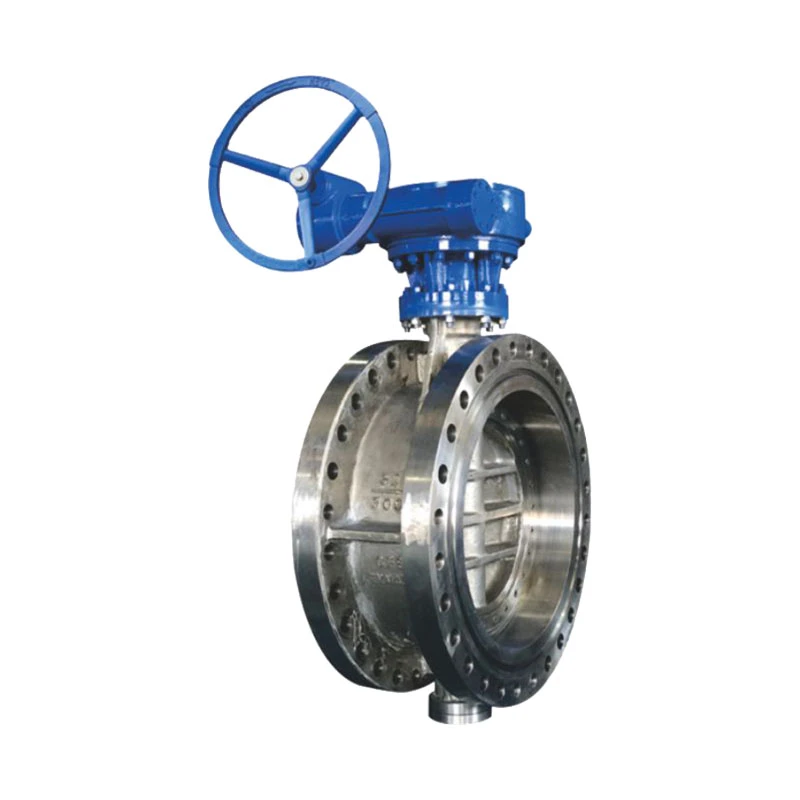
A triple-offset butterfly valve retains a disc in the flow passage. A ball valve uses a rotating bored closure element. Metal seating alone does not make the two designs equivalent or establish which one suits a particular severe service.
Begin with the process task
State whether the duty is isolation, switching or flow control. Describe fluid state, solids or deposits, pressure-temperature combinations, differential pressure, cycling and required shutoff directions. A design suitable for occasional isolation may require a different review for frequent switching or sustained throttling.
Do not infer control performance from a quarter-turn movement. A valve used for modulation needs appropriate sizing, characteristic, controllability and erosion/cavitation assessment as applicable. An isolation valve's pressure class does not answer those questions.
Compare the passage and its consequences
A butterfly disc occupies part of the open passage. In a ball valve, the bore geometry depends on the offered full- or reduced-bore construction. Compare actual flow-capacity or pressure-loss data at the stated conditions, rather than treating every ball valve as zero loss.
| Required function | Useful comparison |
|---|---|
| Low operating pressure loss | Offered valve data at the required flow and fluid properties |
| Tool passage or pigging | Actual clear bore, projections and tool-compatibility confirmation |
| Tight isolation | Applicable test, medium, pressure direction, temperature and acceptance |
| Frequent switching | Qualified construction, operating loads and relevant cycle duty |
| Solids or deposits | Seat/cavity arrangement, build-up risk and service experience within its scope |
| Restricted layout | Actual length, mass, operator envelope and maintenance clearance |
A straight passage can be a strong reason to investigate a ball valve. It is still necessary to verify the actual bore and system requirements. A butterfly valve is not an automatic substitute where unobstructed passage is essential.
Triple offset describes geometry, not unlimited tightness
Triple-offset constructions arrange the shaft and sealing geometry to provide the intended engagement near closure. The exact seat system, loading and leakage capability belong to the selected design. Do not turn “triple offset” into a claim of zero friction, unlimited cycles or identical sealing in every pressure direction.
Likewise, metal-seated ball valves differ in support, seat loading, coatings and geometry. The contact mechanism must be understood for the proposed build. “Metal seated” does not guarantee that abrasive particles cannot damage it or accumulate around the seats.
Valmet discusses both valve families in molecular-sieve switching applications. It illustrates how service conditions influence the choice; its proprietary designs and performance cannot be transferred to a ZGV quotation.
Specify leakage under named conditions
Ask which standard, test medium, pressure, direction and acceptance apply. If the project requires hot shutoff, thermal cycling or a particular reverse-pressure case, identify the corresponding qualification or test requirement. An ambient production seat test does not silently establish all those functions.
Do not equate one leakage-class name with universal zero leakage. Also keep fire qualification and fugitive emissions separate from seat leakage. A metal seat can still be part of an assembly with other seals, joints and operating limits.
Particles and thermal cycling need the actual design
Deposits may interfere with movement or seal contact; particles can affect seating surfaces and cavities. The useful questions concern particle properties, concentration, flow conditions, cycle sequence and the actual provisions used to manage them.
In a hypothetical dryer-switching duty, temperature changes and carryover dust are known concerns. Both bidders must explain their proposed seat construction, operating loads and applicable experience or qualification for that duty. Merely adding a hard-coating name to one offer does not demonstrate suitability.
Valmet's chemical-industry application discussion describes why service-specific seat and cavity arrangements matter. Treat it as manufacturer experience, not a general approval of every coated valve.
Evaluate the complete package and ownership requirements
Compare the operator at minimum and maximum energy supply, required failure action, mounting loads and action time. Required torque can vary with position, differential pressure and seat design. Neither valve family has one universally favourable torque curve.
Then compare actual supplied mass, supports, spares, maintenance access and commercial terms. An alleged fixed percentage saving in cost or weight is not a reliable project estimate. Ask for the size- and configuration-specific values that the plant can use.
Start the ZGV enquiry from real catalogue entries
ZGV lists a triple-eccentric metal-seated butterfly valve and a metal-seated ball-valve reference. These establish product-family starting points, not qualification for every severe duty discussed here.
Send the same service schedule for both alternatives. Request the proposed construction, performance basis, installation drawing and deviations. The most useful selection is the one whose evidence answers the process requirement.
ZGV VALVE · Request a quotation · WhatsApp +86 13732021078
Download the ZGV valve RFQ template and attach your service conditions and required inspection documents.