
A clear deviation register makes valve quotations easier to compare on the scope that matters. Keep materials, operator duty, inspection documents and delivery assumptions beside the buyer's original requirement, then resolve differences before purchase.
Retain the buyer's requirement beside each supplier's actual offer. Mark compliance, deviation and missing information separately, then close material differences before commercial approval. Silence should remain open rather than become assumed compliance.
ZGV's product references, published material tables and quality-document library help buyers give a quotation a clear technical starting point. A shared datasheet and deviation register then make it easier to compare the offered valve, operator, inspection records and supply scope on the same basis.
Freeze the comparison basis
Issue the same datasheet revision, drawing and document schedule to every bidder. Identify the quantities and whether alternatives are invited. If the requirement changes during clarification, communicate the same revision to all relevant bidders.
The industrial valve RFQ guide addresses preparing the enquiry. The next task is evaluating returned offers without losing the original requirement.
Swagelok's valve selection guide includes delivery and supplier support among the buying inputs. The register below is an editorial method for making an actual offer's scope and assumptions visible; it is not a claim about any supplier's delivery performance.
A useful register does not need a complex scoring model. It needs an owner and disposition for each material difference. A weighted score can hide an essential failure if a low price offsets a non-negotiable technical requirement.
Use four response states
| State | Meaning in the register | Next action |
|---|---|---|
| Complies | Offer explicitly addresses the requirement | Retain the relevant drawing/document reference |
| Deviates | Offer changes or excludes a stated requirement | Obtain engineering/commercial disposition |
| Needs clarification | Wording is ambiguous or conditional | Ask a specific question with an owner |
| Not stated | The requirement has no identifiable response | Keep open; do not infer inclusion |
Reserve final acceptance for the person authorised by the project. The register makes the decision traceable; it does not make every alternative acceptable.
A fictional comparison without invented prices
Suppose two fictional offers respond to a project needing a defined seat, pneumatic operation and witnessed testing. The following compares scope only; no real supplier or price is represented.
| Requirement | Offer A | Offer B | Issue to resolve |
|---|---|---|---|
| Seat compound specified | Exact compound named | “Equivalent soft seat” | Identify B's actual compound and approval basis |
| Minimum dynamic air supplied | Sizing basis included | Output quoted at higher supply | Obtain B's calculation at the required condition |
| Witness notice/process | Defined in inspection plan | “Testing included” | Confirm whether witness scope is included |
| Material records | Component schedule named | “Certificates supplied” | Identify type and component coverage |
| Delivery | Trigger and scope stated | Number of weeks only | Clarify starting event and deliverable milestone |
The table does not select Offer A. It identifies why Offer B cannot yet be compared on an equal basis. A clarification may close the differences, or reveal an alternative requiring approval.
One completed clarification trail
Here is a fictional documentation example, without a recommended seat compound or real supplier result:
- Requirement: seat compound must match the approved material schedule, revision A.
- Initial response: equivalent soft seat. Status: Needs clarification.
- Clarification request: identify the actual compound and any changed temperature, compatibility or torque basis.
- Returned evidence: revised bill of materials and the applicable supporting data, each identified by revision.
- Disposition: the authorised reviewer either confirms the original requirement is met, approves an explicit deviation, or rejects the alternative.
- Closure: carry the accepted build and document revisions into the order and inspection plan.
The row closes only after that disposition. A new attachment alone does not change Needs clarification into Complies.
Ask what the alternative changes downstream
A change from a full to reduced bore can affect the hydraulic review. A seat substitution can affect material compatibility and torque. A different operator can change utilities, failure action and installation space. A changed end connection can require pipework modifications.
The alternative should therefore identify the changed component, the reason and the affected requirements. Repeating equivalent without supporting details leaves those consequences hidden.
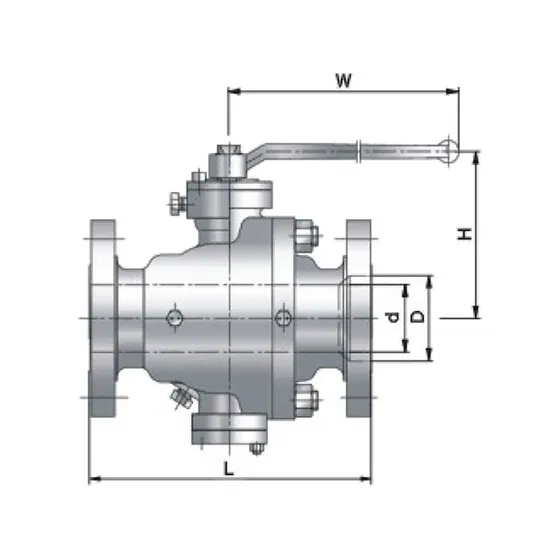
ZGV's 2514 trunnion ball valve and 2567 butterfly valve illustrate why catalogue configurations need specific material and operator identification. A valve-family name is not an approved substitute for the full ordered build.
Separate price from exclusions and assumptions
Once the technical scope is understood, compare commercial information on the same basis. Identify included accessories, testing, documents, packaging and delivery scope. List optional items separately so a lower total does not silently omit a required component.
Delivery needs a starting trigger and a named milestone. Drawing approval, order acceptance or another contractual event can change how a quoted period is interpreted. State the actual agreed basis rather than assume that every supplier means arrival on site.
Also identify quotation validity, currency, delivery term and named place, payment conditions and warranty scope as applicable. Their acceptance belongs in the commercial review. This article provides no legal interpretation or invented market pricing.
Close clarifications as controlled changes
Use a simple record:
Requirement → offered response → evidence → decision → responsible owner → accepted revision.
A phone clarification can help, but the accepted change should reach the final technical and commercial documents. Otherwise the shop drawing or shipment may follow an earlier offer while the buyer relies on a later conversation.
Do not overwrite the original requirement with the supplier's alternative. Preserve the difference and its approval. That record becomes useful at factory inspection and receiving, where the team needs to know which deviation was accepted rather than rediscover it.
The order should contain the agreed build
Before release, reconcile the final material schedule, drawing, operator package, inspection plan, document list and commercial scope. Close critical open points or identify an explicit contractual hold before the relevant work. Keep the document revision list accessible to the people doing inspection.
A complete register can also reduce repeated questions. When an engineer sees the exact changed seat and its accepted evidence, the decision does not need to be reconstructed from unrelated emails or filenames.
Keep an open-item owner and decision deadline beside each clarification. If an item remains unresolved at commercial release, identify the explicit hold or condition and the person authorised to accept it. An attractive total should not silently convert an open requirement into compliance.
Send the common datasheet and deviation register with your product references. Ask the technical reply to mark every alternative and exclusion, so the final comparison reflects the actual purchase.
ZGV VALVE · Zhejiang Zhonggong Valve Group Co., Ltd. · Quality and certification records
Download the ZGV valve RFQ template and share your service conditions, quantities and required documents with ZGV.