
A drawing with two seats and a cavity vent can still leave the most important isolation question unanswered: which seat holds which pressure, from which direction, if the other seat does not seal?
DBB means double block and bleed: the pressure case concerns sealing from both pipe ends with a bleed between the barriers. DIB means double isolation and bleed: two sealing barriers address one pressure source, with a bleed between them. The agreed standard, edition and actual design determine the required function.
| Comparison | DBB pressure case | DIB pressure case |
|---|---|---|
| Pressure source | Pressure can be present at both ends | One identified source is assessed against two barriers |
| Central question | Can the two sources be separated and the intermediate space bled? | Does a second required barrier remain against that source? |
| Remaining review | Seat directions, relief and test scope | Seat directions, relief and test scope |
SLB's manufacturer explanation describes this distinction. Published in 2015, it is useful background, rather than the current edition of a purchase standard. Its broad statements about relief should be checked against the actual seat arrangement, especially where different seats are combined.
Begin with the isolation task
The project may need to isolate pressure arriving from either end. It may instead require two barriers against one pressure source. Those tasks sound similar in a short quotation but place different demands on the seats.
The definitions and qualification rules belong to the specified edition and should be written into the purchase specification. The common pressure-case distinction is explained below; the actual hardware must be confirmed.
A compact instrument manifold can also be called double block and bleed while containing two separately operated block valves. That construction is different from a single closure element with two seats. The buyer needs the actual arrangement, not an assumption that every DBB label describes the same hardware.
Write the pressure cases before naming the seat arrangement
Label the two pipe ends A and B and the body cavity C on a sectional drawing. Then describe the required states. The following is an illustrative enquiry matrix, not a ZGV qualification statement or a field isolation procedure.
| Review case | Pressure source | What to ask the supplier to demonstrate |
|---|---|---|
| End A pressure | A pressurised; B at the stated lower pressure | Which seat provides the first barrier and what the other seat can do |
| End B pressure | B pressurised; A at the stated lower pressure | Whether the required function is available in reverse |
| Cavity pressure | C higher than a pipe end | Whether each seat seals, relieves, or requires an external relief path |
| First-seat leakage | Defined upstream seat leakage condition | Whether a second required barrier remains effective |
| Cavity bleed/monitoring | Specified pressures at A, B and C | Where fluid goes, what is monitored and what result is accepted |
Do not turn this matrix into instructions to open a vent on a live hazardous line. Bleeding, isolation and maintenance require the facility's engineered arrangement and approved procedure.
Seat direction and relief interact
A self-relieving seat arrangement can provide a path from an overpressurised cavity to a line side under specified conditions. A seat designed to retain pressure from both directions creates a different cavity-management question. Neither is universally better; the project must define the required isolation and overpressure protection together.
Habonim's cryogenic bidirectional valve article gives a manufacturer-specific example of how cavity relief can affect sealing direction. Its mechanism should not be assumed for another design. The useful purchasing habit is to put the relief direction on the same drawing as the seat pressure directions.
Ask what happens if both pipe ends are isolated elsewhere, pressure reverses or a specified relief route is unavailable. A statement that the valve is bidirectional may concern line sealing; it does not necessarily answer every cavity-pressure case.
What a trunnion label does and does not establish
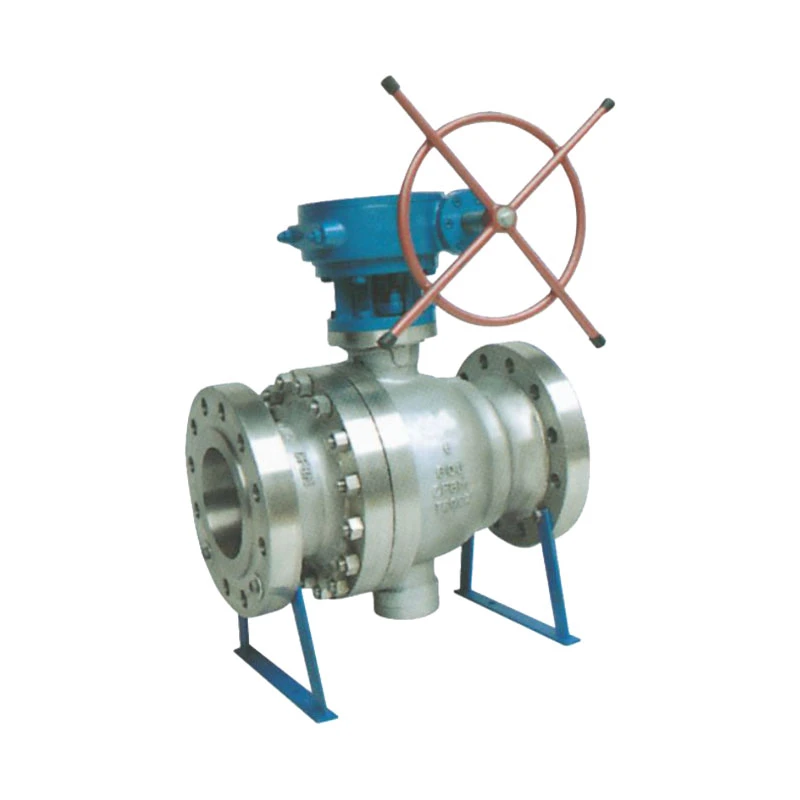
ZGV's 2514 Class 150/300 and 2515 Class 600/900 entries identify trunnion mounted ball-valve configurations. Mechanical ball support does not, by itself, establish DBB, DIB, a particular seat design or an order's isolation approval.
Use those references to request the offered engineering model and a sectional drawing. Have the technical offer identify the actual seat arrangement, sealing directions, relief provisions and documentation. If the configuration differs from the catalogue starting point, the difference should be visible in the quotation.
The floating versus trunnion guide explains ball support. Keep that structural choice separate from the pressure-barrier review in this article.
Read the report against the claimed function
A report headed seat test passed may be useful, but it needs the tested pressure arrangement. Were both ends pressurised together? Were seats checked individually? Was pressure applied from the cavity? Which directions and acceptance criteria were used?
Historic API 6D programme material illustrates separate DBB and DIB test arrangements. It is a 2009 reference, not the current purchase specification. Use the agreed current edition and approved procedure to decide the tests required for an actual order.
The offered design's scope also matters. A result for another seat system or size may not cover the supplied configuration. Ask the supplier to show the relationship, not simply attach a large file of unrelated certificates.
Use SPE and DPE as design descriptions, then verify direction
Single-piston-effect and double-piston-effect terminology describes pressure responses of particular seat designs. A self-relieving seat can move under an applicable cavity-to-line pressure condition; a seat intended to retain pressure from either side behaves differently. The actual pressure areas, loading and seat arrangement determine the response.
Do not infer a universal DBB or DIB classification from two abbreviations alone. An asymmetric seat arrangement especially needs its required pressure-source direction marked on the drawing. A function demonstrated from A toward B may leave a different requirement unresolved when B becomes the pressure source.
For a hypothetical normally A-to-B installation that can experience reverse pressure, ask the supplier to return two explicit cases. In each, identify the source, first required barrier, second required barrier where specified, cavity response and relevant test. If the answers change with direction, retain that limitation in the technical offer and installation information.
This is a way to close an isolation specification. It does not authorise venting hazardous fluid or substitute for a facility's isolation procedure.
Resolve ambiguous quotation language
| Wording in an offer | Clarification that closes the gap |
|---|---|
| “DBB, bidirectional” | Defined standard/edition, hardware arrangement and required pressure cases |
| “Two seats” | Which pressure directions each seat holds and under what conditions |
| “Self relieving” | Opening basis, relief destination and restrictions for the actual assembly |
| “DIB available” | The exact quoted option, its cavity protection and qualification evidence |
| “Safe for maintenance” | Site isolation requirements and the responsible engineering approval |
A purchase decision should connect the required isolation function to a specific drawing and test basis. It should not rely on the number of seats or on an undefined double-seal description.
For a ZGV enquiry, submit the pressure-case matrix with size, class, fluid, temperature and required directions. Ask for the actual proposed build and a response against every case. That is a more useful basis for comparing DBB and DIB offers than choosing an abbreviation first.
ZGV VALVE · Request a quotation · WhatsApp +86 13732021078
Download the ZGV valve RFQ template and attach your service conditions and required inspection documents.